I’m Amira Martin-Saltsman, LCSW-R — a therapist, educator, and woman learning to hold the truth of my own lineage.
For years I’ve helped others explore their stories, but this time, I turned the lens inward.
What I found in my ancestry was both shattering and sacred — a bloodline that carries royalty and bondage in the same breath.
In My Blood: Holding Royalty and Bondage at Once
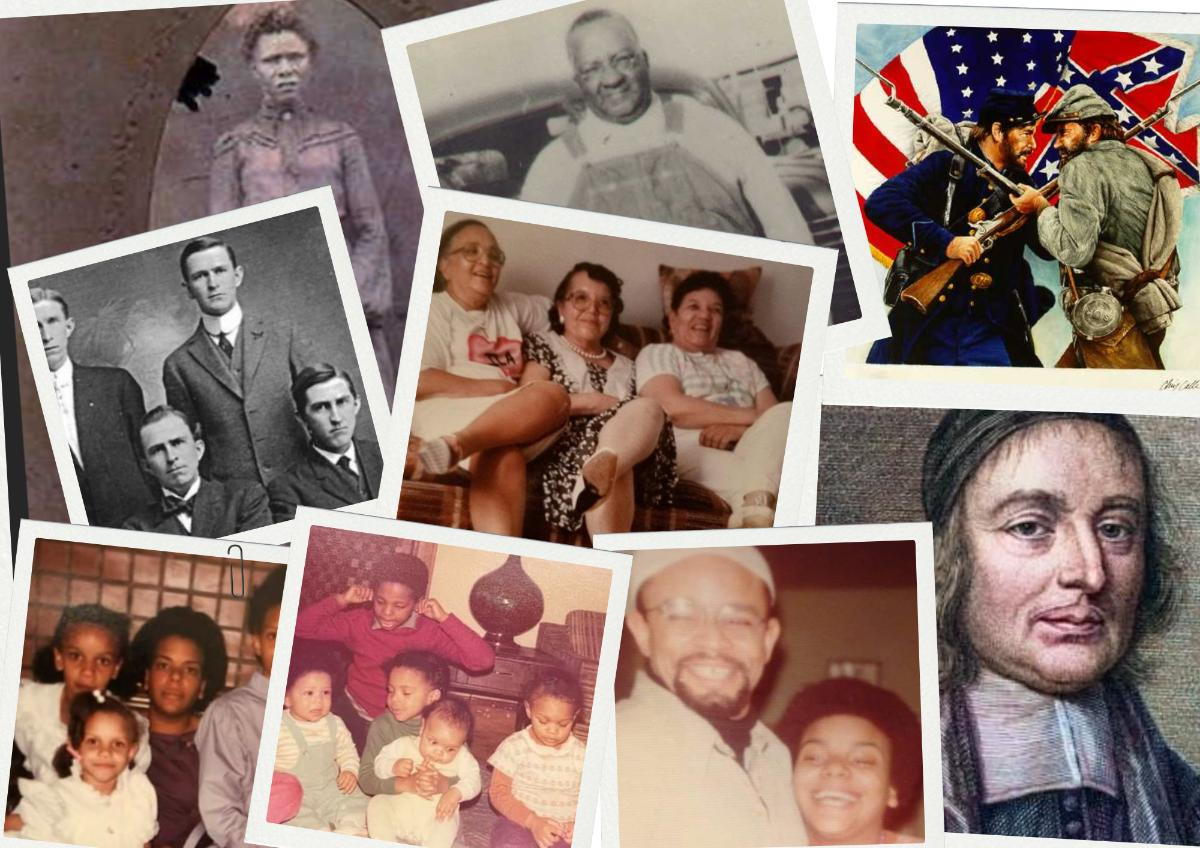
When I look at my ancestry results, they read like a paradox- 63 percent African, mostly Nigerian; 36 percent European; a trace of Native blood. But the numbers don’t tell the story. The story lives in the space between my skin and my spirit, in the names that reappear across centuries: Alston, Harris, Pegues, Temple. Names once written in ledgers by people who owned my people.
For generations my family lived as house slaves on the estates of those same families. Their hands ironed the linen, rocked white children to sleep, carried secrets that were never written down. The enslavers’ names became our names, passed on after freedom because there was no other record of who we had been before. The irony still hums in my DNA: the oppressor’s surname spoken by the descendant of the oppressed.
Yet inside that same DNA sits another thread, English gentry, Cornish and Essex blood, lines of knights, lawyers, and landowners. My ancestry documents suggest that somewhere, perhaps many branches back, my blood mingled with those who lived under the crown itself. Royalty in one century; servitude in the next. The contrast is staggering.
And then there is the Nigeria in me, the pulse I can’t read in old English handwriting but feel in rhythm, resilience, and ritual. The Yoruba and Igbo ancestors whose spirits crossed the Atlantic in chains and kept singing. They taught the children of the house how to survive, how to find small freedoms even inside captivity. That strength didn’t die; it became me.
My grandmother Florida always told me we were descended from Nigerian royalty, but I didn't know our owners (family members who owned us) were descended from royalty as well.
Holding these histories at once is disorienting. How do you claim a lineage that contains both the throne and the plantation? How do you reconcile the parts of yourself that built the system and the parts that were broken by it?
I’ve stopped trying to make it tidy. I choose instead to see truth as healing. Every name, every percentage, every document pulls another veil off my understanding. The European side gave literacy and access to archives. The African side gave rhythm, endurance, and faith that transforms pain into purpose. Together they built a woman who can write her own story.
I am not only what was done to me or by me. I am what was remade through me.
So when I teach, when I sit with a client, when I mother my child, I carry all of them—the queens and the housemaids, the scholars and the seamstresses, the enslaved and the free. Their unfinished prayers are the reason I have a voice strong enough to tell the truth now.
This is what it means to know who I am:
Royalty and bondage sharing the same body.
Grief and grace working the same soil.
Freedom as the gift my ancestors could only imagine.