Chapter 1
Florida’s Inheritance
Florida was my paternal grandmother.
Her name sounded like a place, but she was the most solid of women, a woman who did not wander.
She was born in August of 1921 in Richmond, Virginia, into a middle class Black family that understood both dignity and danger.
She carried herself like someone who knew exactly where she came from, even when the story was not spoken out loud.
She was stern. Not cold. Not unkind. Just certain.
And she loved me in a way that did not need softness to be felt.
I would not be who and where I am today without her.
That is not something I say lightly.
That is something I know in my bones.
Florida was my connection to my father’s past, but more than that, she was the keeper of what the family did not write down.
She did not tell stories like a storyteller.
She told them like facts that had already survived too much to be questioned.
And through her, I learned about Anna.
Anna Ryan.
Born in 1878 in South Carolina.
Dead by 1911 in Cheraw, in the old Cheraws District.
My second great grandmother.
I did not learn her name first.
I learned her story first.
Anna was the mixed race daughter of Sarah and Jake Ryan.
Probably just another pair of half white, half Black parents, the kind no one wrote poems about, the kind history folded into the margins.
I am not sure how she came to be where she was, but I know she was born there.
South Carolina.
That much is certain.
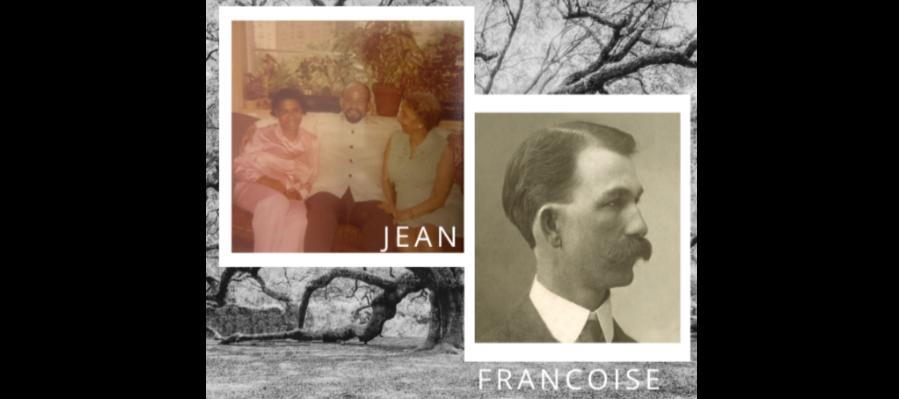
Florida told me that when Anna was about twenty years old, she fell in love with a man named Francois Pegues.
Some called him Frank Wilds Pegues.
He was born on November 16, 1871, in Marlboro County, South Carolina.
He died on November 27, 1939, in Cheraw, Chesterfield County.
My second great grandfather.
Francois was of French blood, but his people had been in this country long enough to be American in every way that mattered.
They came through England generations before, settled, built, established.
They were business owners.
Town administrators.
Men whose names meant something when spoken aloud.
He provided Anna with a small house in or near his much larger property.
A place close enough to be seen, but not close enough to belong.
She was his mistress.
His love interest.
His arrangement.
This was a time when Black and white did not mix openly or easily.
And I will not romanticize it.
She was a Black woman, no matter her hue, in a world where Black women had very few options.
He was a white man of wealth and standing in a place where men like him held all the options.
Together they crossed lines that were not meant to be crossed.
They made something complicated.
Something forbidden.
Something that did not fit inside the rules of the time.
They got messy with it.
That is the closest truth I have for it.
Messy in the way history tries to clean up.
Messy in the way power and desire often are.
Messy in the way that leaves no one untouched.
He married a woman.
Emma Catherine Pegues.
His legal wife.
The one who would be written down, recorded, remembered in the proper way.
Anna Ryan would never be listed as a spouse.
She would never have the ceremony, the recognition, the protection that came with marriage in that time.
She lived in the shadow of something real that could not be named.
Maybe in love.
Maybe in fear.
Maybe in both.
Anna and Francois had a daughter.
Jean Ryan.
Born December 3, 1902, in Cheraw, South Carolina, USA. He asked that she be named Jean, in recognition of his French heritage.
Jean was olive complexioned, with long wavy brown hair and hazel eyes.
She was petite.
Hardworking.
A child born between worlds that did not want to claim her.
She was my great grandmother.
Florida’s mother.
When Jean was about nine years old, everything changed.
Her mother died suddenly.
They said she was poisoned.
And when Anna died, neither side of Jean’s family would take her in.
Not the Black side.
Not the white side.
She did not belong enough anywhere.
So they sent her away.
Jean was sent to live in a boarding home in St. Augustine, Florida.
A child removed from her place, her people, her name, and the little bit of certainty she might have had.
Maybe there is some truth to the story of the poor mulatto after all.
I carry that story now.
Not as gossip.
Not as speculation.
But as inheritance.
Florida gave it to me the way it was given to her.
Without decoration.
Without apology.
And I am left to make sense of it.
To place it somewhere between my past and my future.
To understand what it means to come from love that could not be named,
and a lineage that refused to disappear anyway.